
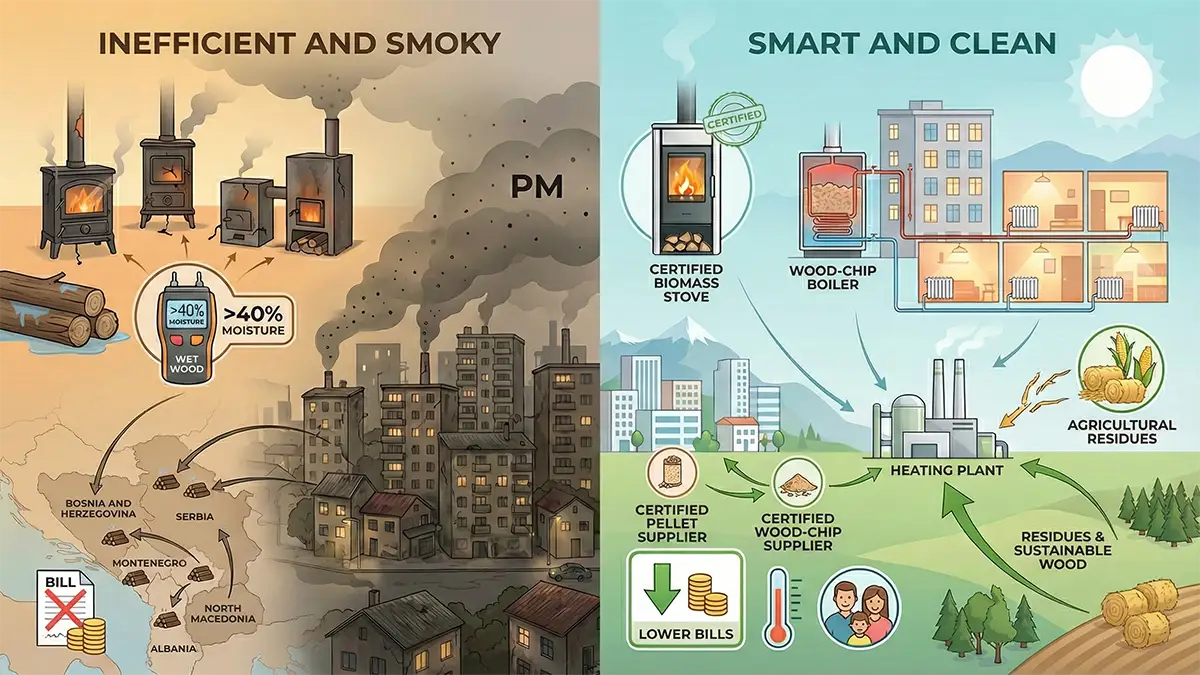
Biomass already keeps the Western Balkans warm—but too much of that heat (and money) goes up in smoke. Outdated stoves and undried wood waste 40–50% of the energy in every log and choke city air with particulates. A practical, investment-ready roadmap can flip this story—cutting bills and pollution while lifting energy security across the region.
Biomass already heats the Western Balkans, but outdated stoves and wet wood waste energy and pollute air. See a practical roadmap—efficient stoves, wood-chip boilers, and biomass district heating—that cuts bills, lifts energy security, and avoids 6.1 Mt CO₂e annually by 2030.
Why this matters now
- Biomass supplies about 42% of the region’s space-heating demand—more than any other source. Yet much of it is burned in leaky stoves and uncertified boilers.
- Fresh, undried wood is common, which can squander nearly half the fuel’s energy and worsen urban air quality from Belgrade to Skopje.
The scale of the opportunity
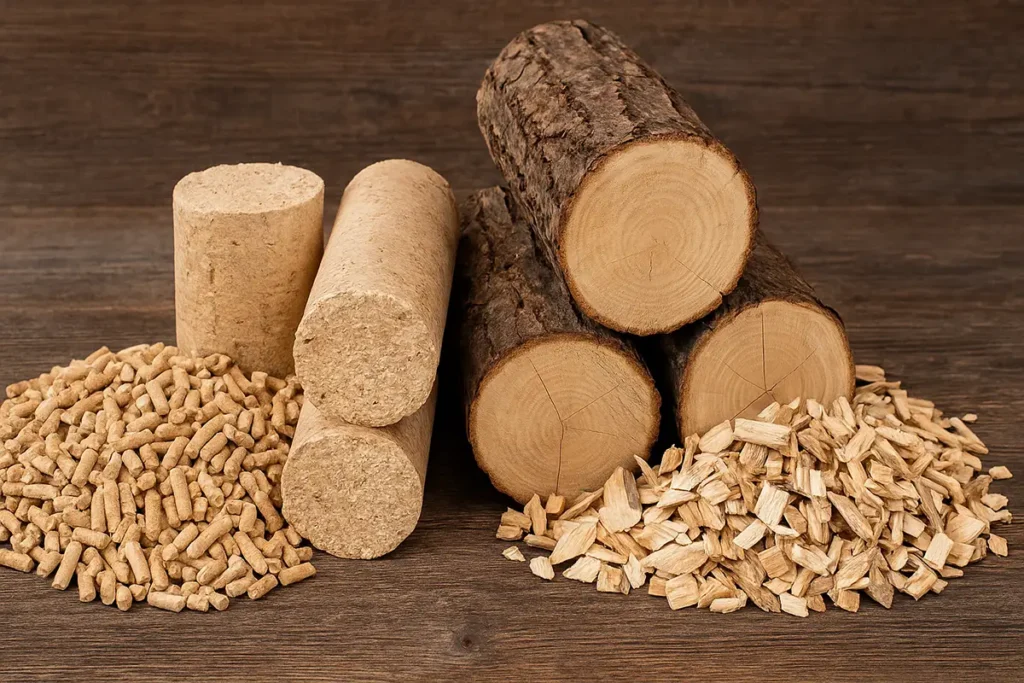
The study finds enough sustainable additional biomass to lift heating supply by roughly one-fifth—about 954 kilotons of oil equivalent (ktoe)—once competing uses are accounted for. That’s a material boost on top of today’s use, without relying on long-lead energy crops.
Unlocking this potential also means fixing supply bottlenecks—like forest logistics and the use of residues—and prioritizing where different biomass types work best (woody fuels in homes; agricultural residues in district heating).
Three high-impact investment programs
To convert potential into results, the roadmap proposes three targeted programs that match fuels to the most effective end-uses:
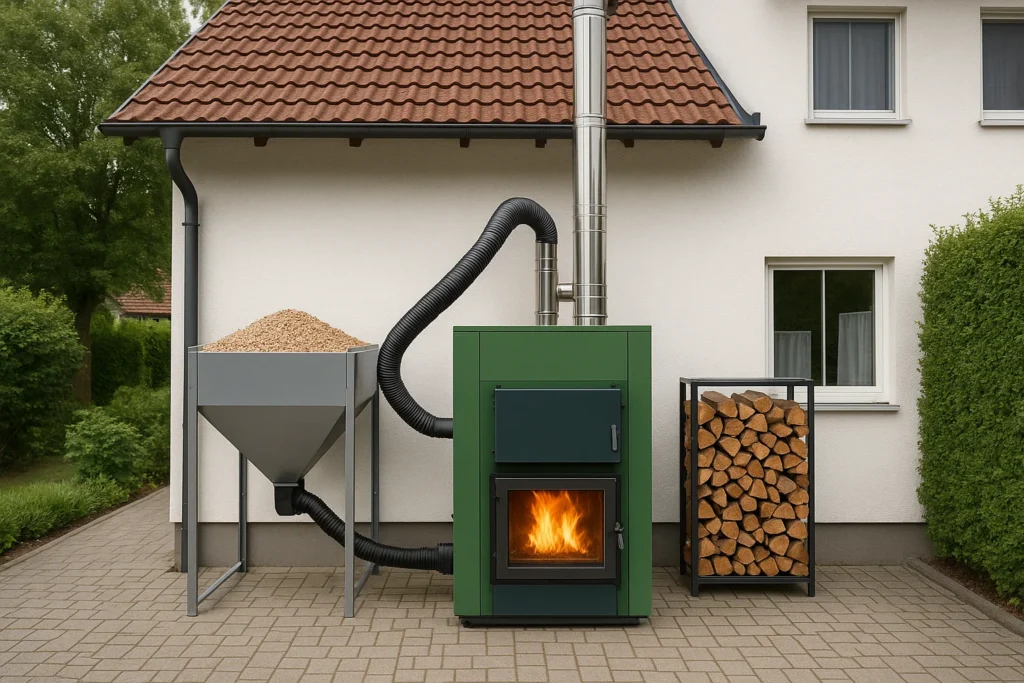
- Homes (stand-alone buildings): Replace inefficient wood stoves with modern, efficient ones; in some countries, switch electric heaters to efficient biomass stoves. This is the fastest, most economical win—big energy savings and cleaner air.
- Multistory buildings: Replace electric heating with wood-chip heat-only boilers (HOBs).
- District heating (DH): Convert existing fossil boilers to biomass and develop new biomass-based DH where viable.
Fully implemented, these programs would raise biomass’s share of space heating from 42% to about 52% and avoid more than 6.1 million tons of CO₂e annually.
- Investment need: ~€1.4 billion through 2030 across programs and enabling measures.
- Annual benefits: After rollout, the region sees large economic gains from lower energy costs (including health and environmental externalities), plus wood savings and reduced electricity use for heating.
The roadmap isn’t just about technology—it’s about conditions that let clean heat scale: better standards and certification for appliances, stronger supply-chain logistics, and coordinated cross-sector policy (energy, environment, agriculture). District heating, which serves only ~12% of demand today, is a prime lever for efficient, large-scale biomass use.
Key recommendations of the study are:
- Move first where the math is best: Swap out inefficient household stoves now—this yields roughly 50% heating-cost savings and major air-quality gains.
- Target electricity-to-biomass switches in buildings that currently use costly electric heating.
- Scale biomass DH in towns with strong agricultural residues and viable networks.
FAQ
Why is wet wood such a problem?
Wet wood wastes 40–50% of a log’s energy and spikes PM emissions. Drying to ≤20% moisture boosts heat output and cuts smoke dramatically.
Is electricity always cleaner for heating?
Not when buildings are inefficient or tariffs are high. Modern biomass with certified appliances and dry fuel can be a cost-effective bridge while insulation improves.
Where should district heating focus first?
Towns with strong agricultural residues, viable networks, and heat density—so DH plants run efficiently and displace the most fossil fuel.