
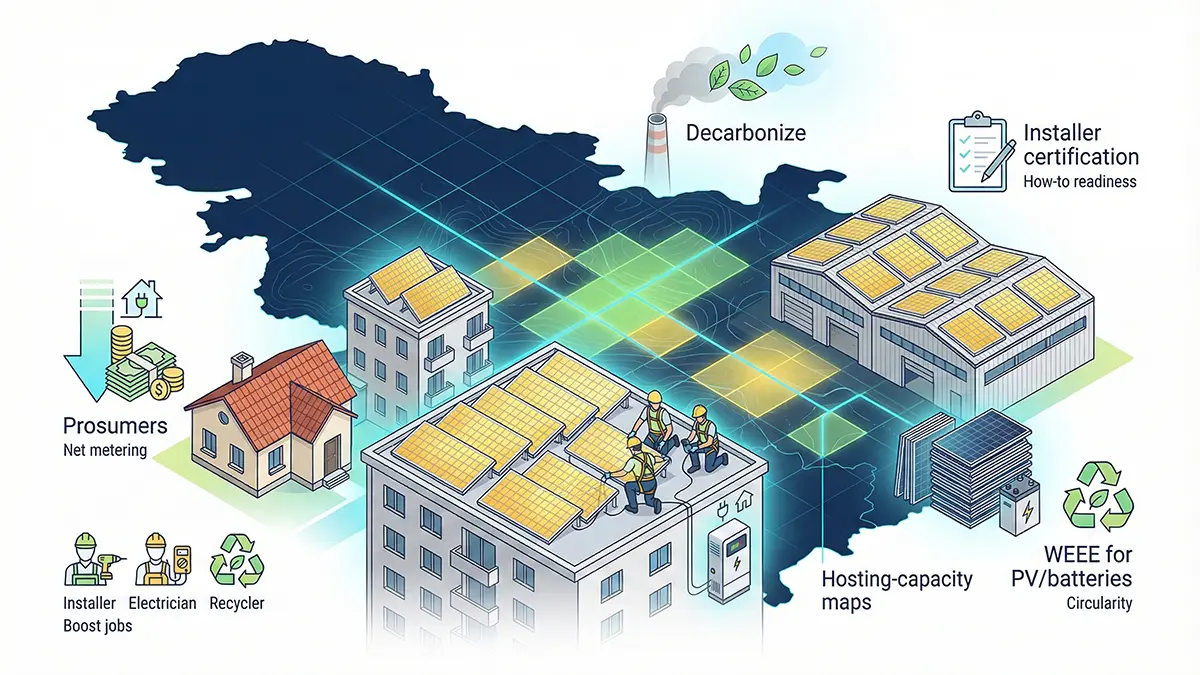
Serbia’s rooftops could theoretically generate up to 74 TWh/year—more than double 2021 electricity demand—yet the national target for rooftop PV by 2030 is just 0.5 GW. The legal base for prosumers already exists. What Serbia needs now is execution: remove bottlenecks so households, HOAs, and companies can connect quickly, safely, and affordably.
Rooftop solar is Serbia’s largest underused energy resource. Learn how prosumers, net metering/net billing, installer certification, hosting-capacity maps, and clear “how-to” guidance can unlock fast, safe, affordable connections for households, HOAs, and companies.
Why prosumers matter right now
Falling PV costs and simple self-consumption models make rooftop solar one of the fastest ways to reduce energy bills. Combined with energy-efficiency measures, prosumers can cut exposure to fossil-price volatility, create local jobs, and stimulate regional economies.
Since 2021, Serbia’s regulatory framework has supported end-consumers in producing their own electricity, storing it for later use, and injecting any surplus power back into the grid. This framework includes net metering policies for households and homeowners associations (HOAs) and net billing arrangements for other consumer categories.
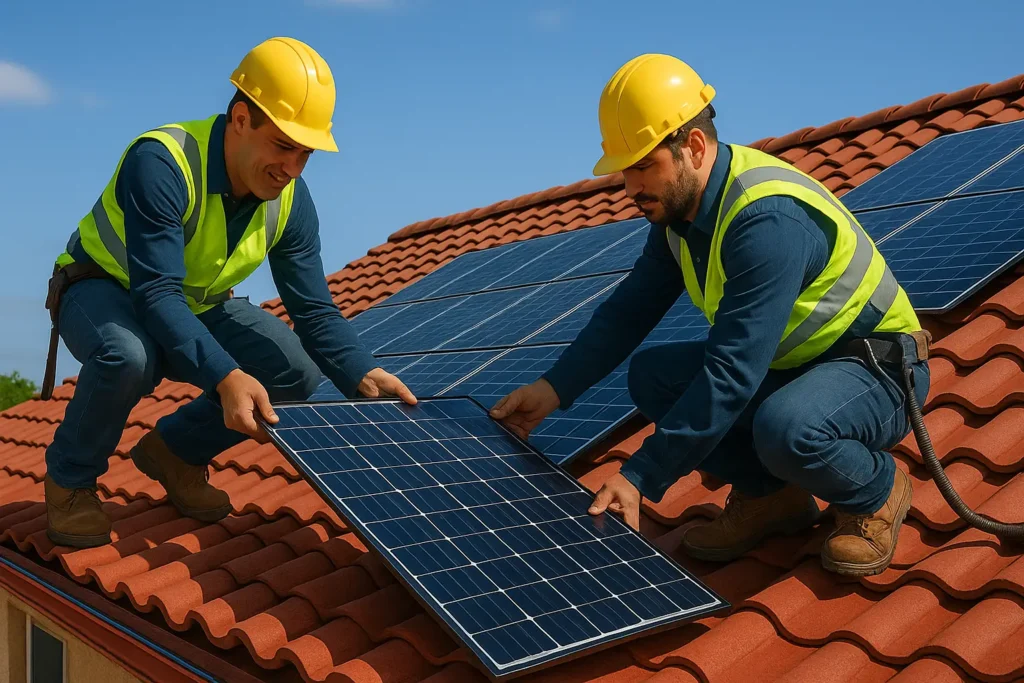
What’s blocking progress in Serbia (and how to fix it)
1) Limited Business Models
Problem: Prosumers must own the plant, restricting access—especially for energy-poor households and multi-apartment buildings.
Fix: Enable third-party ownership (leases/rooftop rentals), virtual net-metering, and renewable energy communities to spread benefits across tenants and neighborhoods.
2) Friction in Permitting and Guidance
Problem: Complex paperwork and unclear steps slow projects.
Fix: Publish clear, category-specific “how-to” guides:
- HOAs
- Households >10.8 kW
- Companies >50 kW
Standardize forms and remove location-condition requirements for rooftop PV where safe to do so.
3) Skills, Safety, and Quality Gaps
Problem: Inconsistent installation quality and safety practices.
Fix:
- Create a national installer certification scheme
- Update standards and publish an EDS list of approved panels
- Train firefighters for PV incidents
- Roll out “solar-ready roof” guidance for architects and developers.
4) Distribution Hosting Capacity
Problem: Investors can’t see where the grid can absorb more PV.
Fix: Conduct and publish hosting-capacity maps with upgrade options so developers and DSOs can plan least-cost expansion.
5) Circularity and E-Waste Readiness
Problem: PV modules and batteries require responsible end-of-life handling.
Fix: Fully transpose WEEE rules for PV and batteries, set up collection points, train recyclers, and inform citizens where to bring PV waste.
How Households, HOAs, and Companies Can Get Started
Households
- Assess roof (shading, structure, orientation).
- Right-size the system to match consumption; consider battery for backup/time-shift.
- Choose a certified installer; use standardized forms and guides.
- Apply for net metering; confirm metering upgrade.
- Keep documents for warranty and future recycling.
HOAs / Multi-Apartment Buildings
- Use HOA-specific guide and template agreements.
- Explore shared arrays and virtual net-metering (when enabled).
- Allocate benefits via transparent rules (common-area loads, bill credits).
- Plan fire-safety access and labeling.
Companies
- Perform a load profile and roof/ground assessment.
- Apply for net billing; model payback with tariff volatility.
- Consider hybrid systems (PV + storage) and demand management to minimize export.
- Check hosting-capacity maps when available; coordinate with the DSO.
Benefits You Can Bank On
- Lower bills & hedging against price shocks
- Quick deployment versus large-scale generation and grid projects
- Local jobs in installation, O&M, and recycling
- Lower losses by generating close to load
- A cleaner power mix without waiting for new transmission lines
Unlock Rooftop Solar, Fast
Serbia already has the prosumers framework. By enabling third-party ownership, streamlining permitting, certifying installers, publishing hosting-capacity maps, and standing up robust PV/battery recycling, Serbia can turn rooftops into its fastest, lowest-risk clean-energy expansion—cutting bills, creating jobs, and strengthening energy security.
FAQ
What is a prosumer?
An end-consumer who produces electricity (e.g., via rooftop solar), can store it, and may export surplus to the grid.
Net metering vs net billing—what’s the difference?
Net billing: Exported energy is credited at a defined rate, separate from the import price.
Net metering: Export offsets consumption one-for-one within settlement rules.
Is rooftop solar worth it without a battery?
Yes—especially with good self-consumption. A battery adds backup and time-shifting value; economics depend on tariffs and usage patterns.
How do hosting-capacity maps help?
They show where the distribution grid can accept more PV today and where low-cost upgrades can unlock additional capacity—reducing delays.