
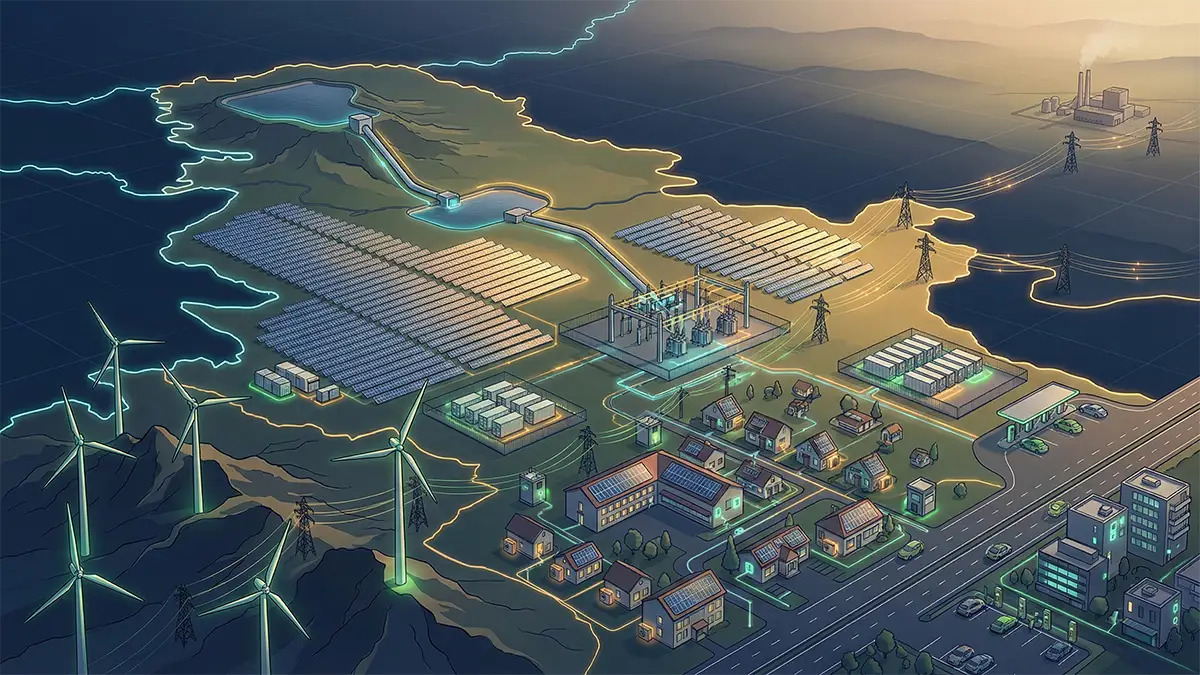
Serbia aims to transform its electricity system by 2030. The National Energy and Climate Plan (NECP) says the grid will be cleaner, more flexible, and more digital. This plan includes new storage, smart meters, and numerous charging points for electric vehicles (EVs).
What’s in the pipeline
- More renewables, more flexibility. Utility-scale wind and solar energy are expected to expand to ~3 GW installed by 2030, supported by pumped storage projects (such as Bistrica) and battery projects.
- Electrification is the growth engine. Heat pumps, prosumers, and EVs anchor demand-side change—paired with a modernized distribution grid and smart meter rollout (to cover 80% of consumption by 2030).
- Coal’s role declines. Lignite’s share in electricity production is expected to decline (the plan indicates a reduction of roughly a quarter compared to 2019), with gas-fired capacity serving as a transitional backup to ensure adequacy.
- Digital, data-driven operations. Grid digitalization, new forecasting tools, and cybersecurity indicators shift from slide decks to requirements.
More wind and solar power will be built. By 2030, Serbia plans to install approximately 3 GW of wind and solar energy. These power plants will shift the country’s electricity mix toward clean energy.
Flexibility is the key to keeping the lights on when the wind is weak or clouds cover the sun. Serbia will utilize pumped-storage hydropower and battery energy storage systems (BESS). The Bistrica pumped-storage project is the flagship project. Batteries will also support “self-balanced” solar plants, allowing for more clean energy to be used when needed.
People and companies will play a larger role. Prosumers, who both produce and consume electricity with rooftop solar photovoltaic panels (PV), will move from pilots to everyday practice. Rules for connections, data, and taxes will be more explicit, allowing installers, distribution system operator (DSO), and banks to work more efficiently. Energy communities will enable neighbors to share equipment and balance local energy use.
The grid will be upgraded to handle these changes. The transmission system operator (TSO) that operates high-voltage lines will strengthen key corridors, while the distribution network will enhance automation, improve protection, and implement power-quality monitoring. These steps raise the grid’s capacity to connect new projects and reduce outages.
Smart meters will be rolled out widely. By 2030, at least 80% of electricity consumption should be measured using advanced metering infrastructure (AMI), which includes digital meters that record usage in detail. Smart meters enable time-of-use tariffs and support demand response, allowing users to shift their usage to cheaper hours. They also help bill prosumers and EV charging fairly and accurately.
Transport will become more electric. Purchase incentives and a national charging program will accelerate the adoption of electric vehicles (EVs). Thousands of public chargers are planned between 2025 and 2030. Clear processes for charge point operators (CPOs – companies that run chargers) and DSO are needed so connections keep pace with demand.
Heating will get cleaner. Heat pumps will help homes and district heating systems use less fossil fuel. The plan supports them with financial incentives, technical standards, training for installers, and grid readiness. Pairing rooftop PV with heat pumps can lower bills and flatten daily electricity peaks.
Coal will play a minor role. Lignite will supply a 25% lower share of electricity than in 2019. To maintain a secure supply while coal production declines, Serbia will rely on pumped storage, batteries, stronger interconnections with neighbors, and some gas-fired capacity as a temporary bridge.
There are risks to manage. Slow permits and grid connections can delay projects. DSO must expand hosting capacity and update protection settings and data systems as rooftops and EVs grow. Flexibility markets must open so batteries and prosumers can sell services like balancing and reserves. Regions that depend on lignite require substantial investment and training to ensure a fair transition.
In short, the NECP provides Serbia with a workable path to 2030: to build wind and solar, strengthen and digitize the grid, add storage, and electrify transport and heating. Success depends on quick, coordinated action by the TSO, DSO, investors, and public authorities. If Serbia delivers, it will have cleaner electricity and a stronger, more resilient economy.